
Boxing great Muhammad Ali has died at the age of 74.
The three-time former world champion, widely considered among the greatest heavyweights in the history of the sport, has passed away after being taken to an Arizona hospital with respiratory issues.
Ali had suffered for 35 years with Parkinson’s disease, having been diagnosed three years after his retirement in 1981.
His family's spokesman Bob Gunnell confirmed Ali's death in Phoenix, Arizona, on Friday evening local time.
The funeral will take place in Ali's home town of Louisville, Kentucky where Mayor Greg Fischer today addressed the world to pay tribute to the city's most famous son, as the flags were lowered to half mast.His hands and his mouth were furiously fast. His skill as a boxer made him "The Greatest" in his mind and in the minds of many others.
He
antagonized opponents with his taunts, amused reporters with his boasts
and angered government officials with his anti-war speeches. At the
same time, he goaded a stubborn, hard-nosed society with his stinging
jabs against pervasive racism.
Since
the mid-1960s, he was one of the most famous faces on Earth, and even
though his appearances in recent years were few, the name Muhammad Ali still sparked smiles all around the globe.
His death Friday at age 74
came after a lengthy battle against Parkinson's disease. Ali was
diagnosed with the disease in 1984, three years after he retired from a
boxing career that began when a skinny 12-year-old Louisville, Kentucky,
amateur put on the gloves.
All about Muhammad Ali
He
is survived by his nine children, including daughter Laila, who, like
her father, became a world champion boxer; and his fourth wife, Lonnie.
Ali
was known in the ring for his lightning hand speed -- unusual for a
heavyweight -- for his showmanship and for his brashness and braggadocio
when a microphone was put before him. He taunted opponents before
matches, trash-talked them during and proclaimed his greatness to
reporters afterward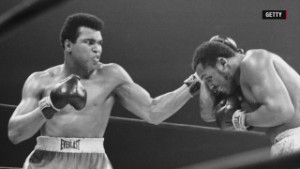
He
stayed on his toes, literally, during a bout, sometimes quickly moving
his feet forward and backward while his upper body stayed in place. The
mesmerizing move became known as the "Ali Shuffle."
Fans on every continent adored him, and at one point he was the probably the most-recognizable man on the planet.
But
he also was a controversial figure at home, announcing his conversion
to Islam and name-change after an upset title win over Sonny Liston,
then refusing to enter the draft for the Vietnam War and publicly
speaking about racism in the United States.In youth, told he'd better learn to box
Ali
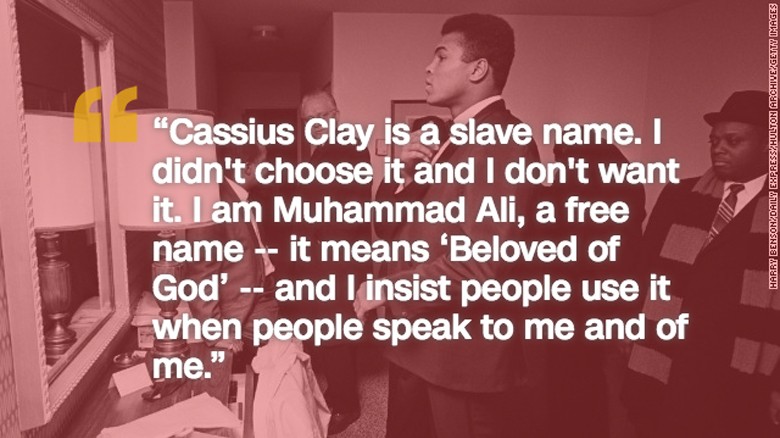
was born January 17, 1942, in Louisville as Cassius Marcellus Clay Jr.
His interest in boxing began at age 12, after he reported a stolen bike
to a local police officer, Joe Martin, who was also a boxing trainer.
Martin told the young, infuriated Clay that if he wanted to pummel the person who stole his bike, he had better learn to box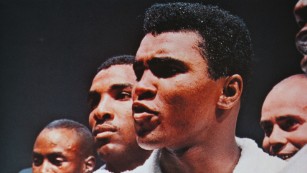
 In
stark contrast to Clay's pretty-boy image, Liston -- a formidable and
domineering fighter -- had an extensive criminal past. He learned to box
in prison. But the young, brash Clay appeared supremely confident, and
his mocking of Liston was relentless.
In
stark contrast to Clay's pretty-boy image, Liston -- a formidable and
domineering fighter -- had an extensive criminal past. He learned to box
in prison. But the young, brash Clay appeared supremely confident, and
his mocking of Liston was relentless.
 "I just acted like I wasn't," he said.

 "What was so important
about it was that in a war in which young black men, mainly without any
money and with little education, were dying in disproportionate numbers
and being shipped off to Southeast Asia in disproportionate numbers, the
symbol of strength, the symbol of vitality and virility, this young
black man -- outspoken -- stands up and says 'no,'" explained David
Remnick, author of "King of the World," a book about the young boxer.
"What was so important
about it was that in a war in which young black men, mainly without any
money and with little education, were dying in disproportionate numbers
and being shipped off to Southeast Asia in disproportionate numbers, the
symbol of strength, the symbol of vitality and virility, this young
black man -- outspoken -- stands up and says 'no,'" explained David
Remnick, author of "King of the World," a book about the young boxer.
 The
anti-war sentiment had gathered momentum by 1970, when a judge ruled
that Ali could box professionally. When Ali made his return to the ring,
he discovered that the long absence had left a marked effect on his
skills.
The
anti-war sentiment had gathered momentum by 1970, when a judge ruled
that Ali could box professionally. When Ali made his return to the ring,
he discovered that the long absence had left a marked effect on his
skills.
Over
the next six years, Clay won six Kentucky Golden Gloves championships,
two National Golden Gloves championships and two National Amateur
Athletic Union titles.
Just months
after he turned 18, Clay won a gold medal as a light heavyweight at the
1960 Olympic Games in Rome, convincingly beating an experienced Polish
fighter in the final.
The story
goes that when he returned to a hometown parade, even with the medal
around his neck, he was refused service in a segregated Louisville
restaurant because of his race. According to several reports, he threw
the medal into a river out of anger. The story is disputed by people who
say Ali misplaced the medal.
Thirty-six
years later, he was given a replacement medal and asked to light the
cauldron at the 1996 Olympic Games in Atlanta, something he said was one
of the greatest honors in his athletic career.
Clay turned professional after the 1960
Olympics and quickly won 19 straight fights. For many of them, Clay --
then known as "The Louisville Lip" -- would make a rhyme to predict in
what round his opponent would fall.
The underdog stings like a bee
For
his first heavyweight title fight, against the brutish Liston in 1964,
he went a step further, renting a bus, and on the day he signed to fight
the champ he went by Liston's home.
On
the side of the bus was painted: "World's Most Colorful Fighter" and
"Liston Will Go In Eight." To make sure he was heard, Clay used a
megaphone and shouted from an open window.
And
in the lead-up to the fight, Clay, flanked by corner man Drew "Bundini"
Brown, uttered the famous phrase that followed him forever, "Float like
a butterfly, sting like a bee." (Often missed is the subsequent line,
"Rumble, young man, rumble.")
In
stark contrast to Clay's pretty-boy image, Liston -- a formidable and
domineering fighter -- had an extensive criminal past. He learned to box
in prison. But the young, brash Clay appeared supremely confident, and
his mocking of Liston was relentless.
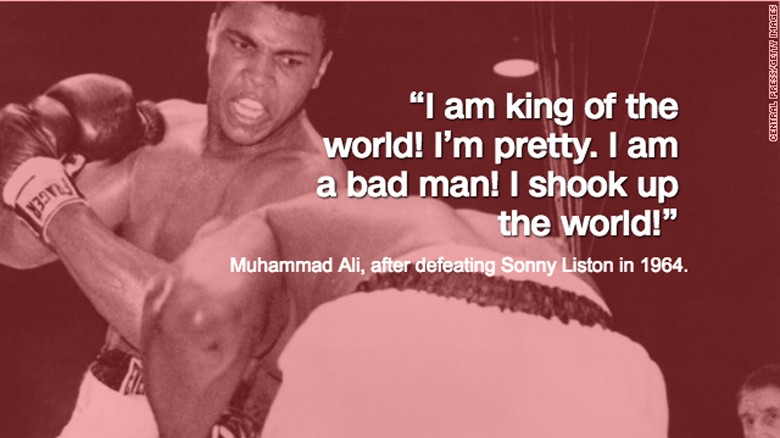
"The crowd did not dream when they laid down their money that they would see the total eclipse of the Sonny," he said.
Despite the 7-to-1 odds against him, Clay defeated Liston in seven rounds to become heavyweight champion of the world.
He later told CNN's Nick Charles that, despite his bravado, he was "scared to death."
"I just acted like I wasn't," he said.Post-Liston: From Cassius X to Muhammad Ali
The
day after the Liston fight, Clay announced that he had joined the
Nation of Islam and was changing his name to Cassius X, the letter
symbolizing the unknown name taken away from his family by slave owners
hundreds of years before.
A year
later, he was anointed Muhammad Ali by Nation of Islam leader Elijah
Muhammad. Most sportscasters initially refused to call him by his new
name. But Howard Cosell did, becoming a supporter and friend to the
champ as they verbally sparred for the rest of Cosell's life.
Once Cosell said Ali was being truculent.
Ali snapped back, "Whatever truculent mean, if that's good, I'm that."
Many
in the United States scorned Ali's name change and his alignment with
the Nation of Islam, and a furor erupted after he refused, because of
his religious beliefs, to serve in the military during the Vietnam War
when he was called up in 1966.
Laila Ali 'a chip off the old block' 01:38
"I ain't got no quarrel with them Viet Cong," Ali said. "No Viet Cong ever called me n----r."
At the weigh-in before one of his last fights of 1967, his opponent, Ernie Terrell, called him "Clay."
A furious Ali trounced Terrell in the ring while yelling "What's my name?" A month later, Ali knocked out Zora Folley.
But, at the peak boxing age of 26, he began a forced three-and-a-half-year exile from championship boxing.
The conscientious objector
Almost
as quickly as Ali had arrived, his World Boxing Association heavyweight
title was gone, revoked after he claimed conscientious objector status
in refusing the draft. He also was stripped of his passport and all of
his boxing licenses. He faced a five-year prison term after losing an
initial court battle defending his objection to serving in a war that he
called "despicable and unjust."
Ali lost the chance at tens of millions of dollars in endorsements while appealing his case to the U.S. Supreme Court.
During
this time, Ali aligned himself with Nation of Islam leaders including
Malcolm X, making him even more of a controversial figure as well as a
household name.
He earned a living
during his hiatus from boxing by speaking against the Vietnam War on
college campuses, one of the first national figures to verbally oppose
the war.
"What was so important
about it was that in a war in which young black men, mainly without any
money and with little education, were dying in disproportionate numbers
and being shipped off to Southeast Asia in disproportionate numbers, the
symbol of strength, the symbol of vitality and virility, this young
black man -- outspoken -- stands up and says 'no,'" explained David
Remnick, author of "King of the World," a book about the young boxer.Back to the ring -- and on to Joe Frazier
The
anti-war sentiment had gathered momentum by 1970, when a judge ruled
that Ali could box professionally. When Ali made his return to the ring,
he discovered that the long absence had left a marked effect on his
skills.
The politics of 'Rumble in the Jungle' 01:41
He
quickly dispatched Jerry Quarry in his first fight back, but had a
rough 15-round go with Oscar Bonavena before he got a chance to reclaim
his title.
In 1971, he and his
perfect record met undefeated champion Joe Frazier in an epic battle
that boxing writers have dubbed "The Fight of the Century." Each man was
guaranteed $2.5 million, at that time the biggest boxing payday in the
sport, with an estimated 300 million viewers worldwide.
Their rivalry would become legend and intensely personal, with constant verbal taunting from Ali.
"I'll
be the ghost that haunts boxing," he said. "People will say, 'Ali is
the real champ, and everyone else is a fake,'" Ali said of Frazier.
Ali
also hurled racial insults at Frazier, calling him an "Uncle Tom" and a
black man disguised as a Great White Hope, a phrase that Frazier later
said infuriated him.
And Ali
delighted the media when he proclaimed, "Joe is going to come out
smoking, but I ain't going to be joking. I'll be pecking and a-poking,
pouring water on his smoking. This might shock and amaze ya, but this
time I'll retire you, Frazier."
The
world would soon learn that even the man who called himself "The
Greatest" had his struggles. The match began with both fighters engaging
in a series of powerful punches and counterattacks. In the 15th round,
Frazier unleashed a devastating left hook that floored Ali.
It
would be only the third time Ali had been knocked down in his career.
When the final bell rang, the judges awarded Frazier a 15-round
decision, sending Ali to his first loss in 32 professional fights.
Months
after the defeat, Ali got a major victory outside the ring when the
U.S. Supreme Court upheld his conscientious objector claim. His passport
and his boxing licenses were reinstated, and the threat of prison time
was erased.
Over the next few
years, Ali's religious views turned him more toward Sunni Islam, and he
rejected many of the teachings of the Nation of Islam.
He
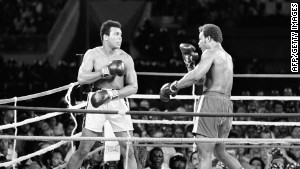
won a 1974 rematch with Frazier, earning another shot at the
heavyweight title, which would turn out to be the fight of his career
and one of the most memorable events in sports history.THE IOL
No comments:
Post a Comment